
BIBLICAL POEMS – Volume 8 The Armor of Faith
A Depiction of Spiritual Strength Through God's Truth
The Biblical Poems page of Pinnacle Message Ministries is a sacred meeting place where Scripture and poetry breathe together. Here, the eternal Word of God is not rewritten—but reverently reflected, transformed into poetic expressions that stir the heart, awaken understanding, and draw the reader deeper into divine truth.
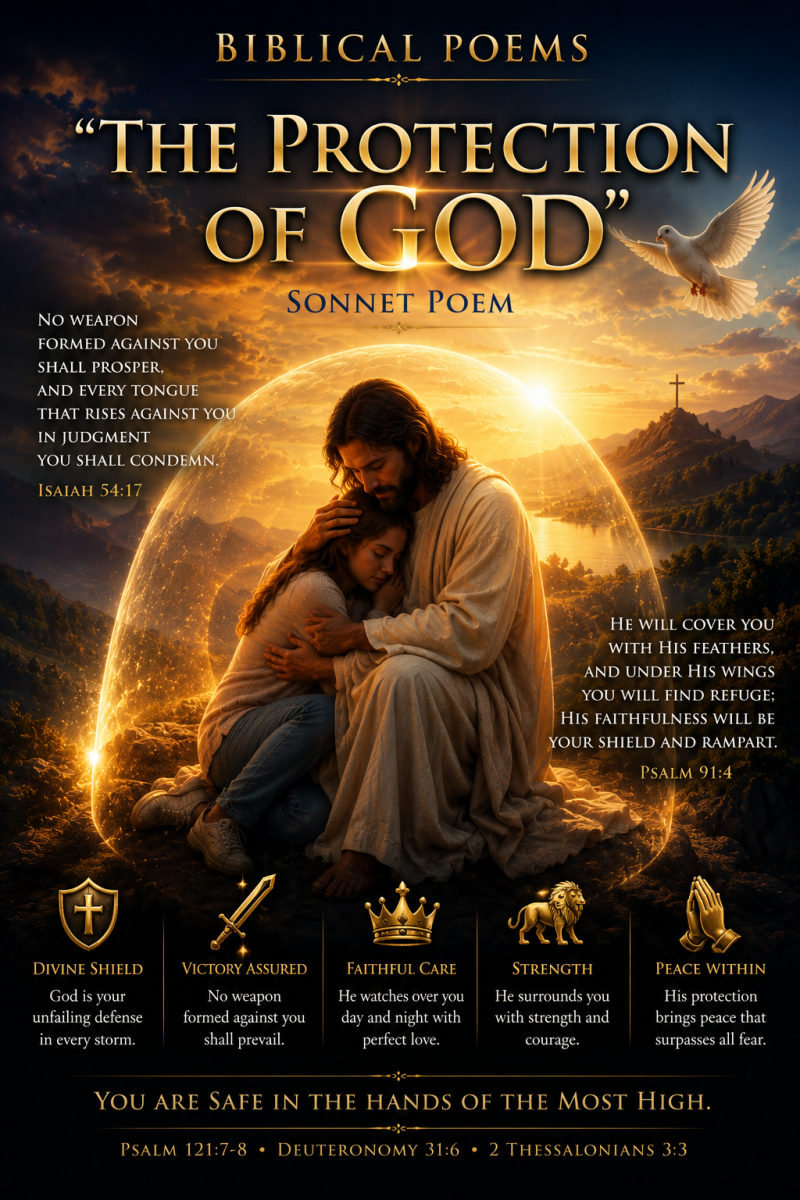
When shadows rise and fears encircle tight,
The Lord becomes my refuge and my shield;
His wings conceal me far beyond my sight,
A sacred strength the world can never steal.
No arrow formed by night nor plot by day
Can pierce the truth His promises defend;
Though storms may roar and test the narrow way,
His faithful hand will guard me to the end.
He speaks, and trembling hearts are clothed with peace,
He stands between the peril and my soul;
In Him, all doubts and raging threats must cease,
For God alone commands what seeks control.
Secure I stand, though earth and heavens move—
Preserved by power, perfected in His love.
This poem rises from moments when fear presses close and uncertainty looms. It declares God not as distant observer, but as active defender—one who steps between danger and His children. Through imagery of shelter, storms, and divine authority, the poem leads the reader into assurance that God’s protection is constant, intentional, and rooted in love.
Scripture repeatedly presents God as a refuge and shield (Psalm 91:1–4; Psalm 46:1). The poem draws from this biblical truth, portraying protection not merely as physical safety, but as spiritual preservation. God’s defense is shown as sovereign—arrows, storms, and threats exist, yet none surpass His authority. The sonnet structure reinforces order and stability, mirroring the steadiness of God Himself.
For believers, this poem affirms that protection does not mean absence of trials, but presence of God within them. Faith rests not in circumstances improving, but in God standing firm. The poem encourages trust—reminding the reader that no fear, plan, or force can override divine guardianship. God’s protection is not fragile; it is perfected in love.
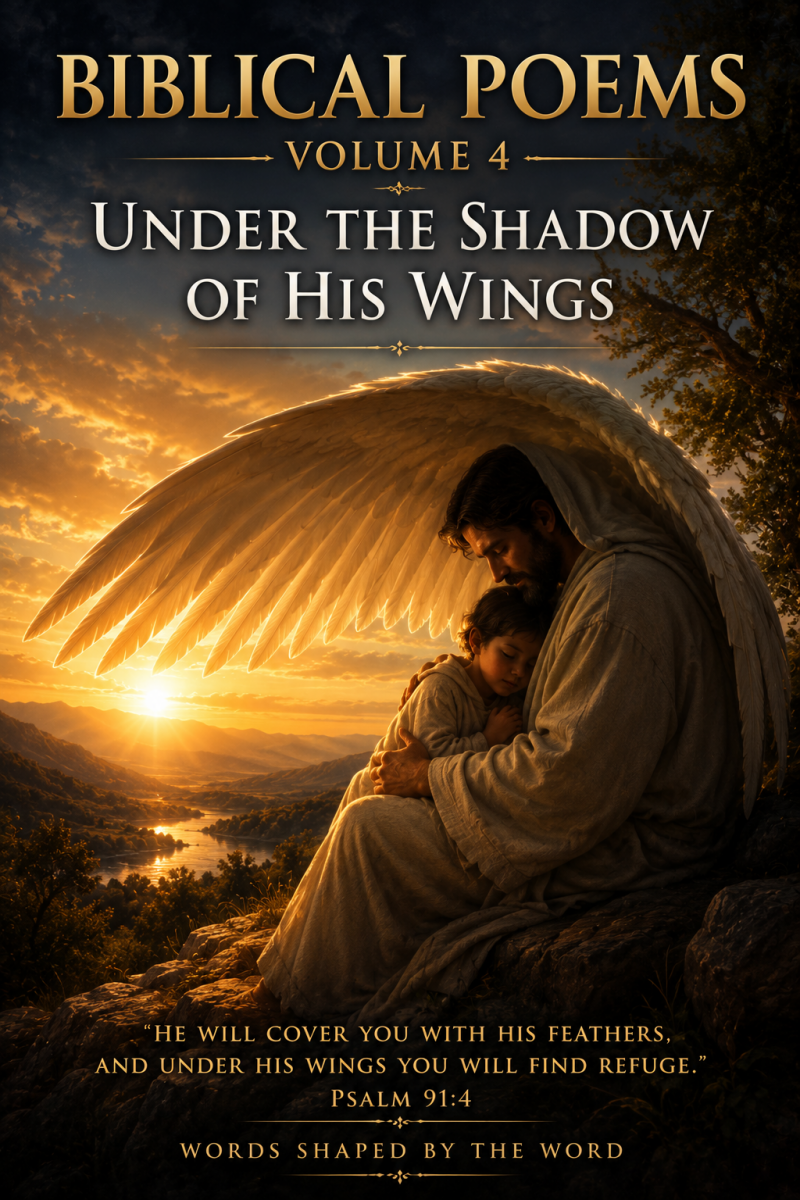
The Bible — Psalm 91:4, Psalm 57:1, Matthew 23:37
When storms arise and trembling hearts grow weak,
I turn toward heaven’s quiet, sacred place;
Beneath His wings the weary refuge seek,
And find the calm of everlasting grace.
The world may roar with thunder in the sky,
Yet still His shelter holds the faithful near;
No raging wind nor restless tide runs high
Enough to break the promise spoken here.
Like gentle wings that shield the fragile nest,
His mercy guards the soul through darkest night;
Within His care the troubled heart finds rest,
Secure beneath the warmth of holy light.
And there I dwell where fear can never stay—
Protected by the love that leads the way.
This poem draws upon the comforting biblical imagery of God’s wings as a place of refuge. Throughout Scripture, the wings of God symbolize divine protection, tenderness, and security. The poem paints a picture of believers finding safety beneath this heavenly covering, especially during seasons of fear, uncertainty, and hardship.
Just as a bird shelters its young from danger, God lovingly gathers His people into His presence where peace replaces fear.
Psalm 91:4 declares that God will cover His people with His feathers and that under His wings they will find refuge. Psalm 57:1 echoes this assurance, expressing trust in God’s protection until disaster passes. In Matthew 23:37, Jesus describes His longing to gather His people together like a hen gathering her chicks under her wings.
These passages reveal God’s protective heart. His care is not distant or abstract—it is intimate and compassionate.
The message of this poem reminds believers that God’s protection is deeply personal. Life may bring storms, but those who trust in God find a safe refuge in His presence.
The shadow of His wings represents the spiritual covering that comes through faith and relationship with God. When believers turn to Him in prayer and trust, they discover that divine peace is stronger than fear
Each poem on this page is rooted firmly in Scripture, anchored by carefully chosen Bible verses that guide its rhythm, imagery, and message. These are not abstract reflections, but spiritually grounded works that echo the voice of the prophets, the prayers of the psalmists, and the redemptive heartbeat of the Gospel. Through vivid language and contemplative tone, the poems invite readers to pause, reflect, and encounter God beyond hurried reading.
This page is designed to engage both the spirit and the mind. Alongside each poem, narration sets the scene, exposition reveals biblical context, and interpretation offers spiritual insight—making the poetry accessible, teachable, and deeply devotional. Whether exploring themes of stillness, covenant, sacrifice, hope, or divine intimacy, every piece points back to God’s unchanging truth.
Visually, the Biblical Poems page is enriched with carefully curated imagery—open Scriptures bathed in light, ancient scrolls, mountains of prayer, and symbols of Christ’s love—creating an atmosphere of reverence and reflection. Together, word and image form a worshipful experience.
This collection is for believers seeking quiet meditation, for readers longing to feel Scripture anew, and for hearts hungry for beauty shaped by truth. Here, poetry becomes a vessel—carrying Scripture from the page into the soul.
Poetry rooted in Scripture. Words shaped by the Word
Jul 14, 2026 2:31 p.m.
A Depiction of Spiritual Strength Through God's Truth
May 28, 2026 3:22 p.m.
The Bible — Psalm 119:105, John 1:5, Hebrews 4:12

The Biblical Poems page of Pinnacle Message Ministries is a sacred meeting place where Scripture and poetry breathe together. Here, the eternal Word of God is not rewritten—but reverently reflected, transformed into poetic expressions that stir the heart, awaken understanding, and draw the reader deeper into divine truth.
Each poem on this page is rooted firmly in Scripture, anchored by carefully chosen Bible verses that guide its rhythm, imagery, and message. These are not abstract reflections, but spiritually grounded works that echo the voice of the prophets, the prayers of the psalmists, and the redemptive heartbeat of the Gospel. Through vivid language and contemplative tone, the poems invite readers to pause, reflect, and encounter God beyond hurried reading.
This page is designed to engage both the spirit and the mind. Alongside each poem, narration sets the scene, exposition reveals biblical context, and interpretation offers spiritual insight—making the poetry accessible, teachable, and deeply devotional. Whether exploring themes of stillness, covenant, sacrifice, hope, or divine intimacy, every piece points back to God’s unchanging truth.
Visually, the Biblical Poems page is enriched with carefully curated imagery—open Scriptures bathed in light, ancient scrolls, mountains of prayer, and symbols of Christ’s love—creating an atmosphere of reverence and reflection. Together, word and image form a worshipful experience.
This collection is for believers seeking quiet meditation, for readers longing to feel Scripture anew, and for hearts hungry for beauty shaped by truth. Here, poetry becomes a vessel—carrying Scripture from the page into the soul.
Poetry rooted in Scripture. Words shaped by the Word.
We're excited to share our story with you.
Apr 8, 2026 12:43 p.m.
The Bible — Psalm 30:5, Lamentations 3:22–23, Isaiah 60:1
Mar 23, 2026 2:05 p.m.
There is a language that speaks beyond words—a rhythm that carries truth deeper than logic can reach. Welcome to Biblical Poems, where Scripture is not only read but felt, seen, and experienced through poetic expression.
Mar 18, 2026 12:39 a.m.
BIBLICAL POEMS – Volume 6: The River of Living Water
Mar 16, 2026 1:03 p.m.
BIBLICAL POEMS – Volume 2: The Voice of the Shepherd
Mar 9, 2026 12:16 a.m.
BIBLICAL POEMS – Volume 2: The Voice of the Shepherd

Discover the beauty of God’s Word expressed through poetry.
The Biblical Poems Collection invites readers into a deeper spiritual journey where Scripture becomes song, reflection, and prayer.
IN STORE
Mar 4, 2026 12:37 a.m.
When shadows rise and fears encircle tight,The Lord becomes my refuge and my shield;His wings conceal me far beyond my sight,A sacred strength the world can never steal.
Jan 29, 2026 12:19 a.m.
When shadows rise and fears encircle tight,The Lord becomes my refuge and my shield;His wings conceal me far beyond my sight,A sacred strength the world can never steal.

Scriptural Anchor: Isaiah 40:8; John 1:1
Poem
The grass grows weary,
The flower bows its head,
Kingdoms rise like morning mist
And vanish by nightfall’s tread.
But the Word—
It does not age.
It does not bend to time.
It stood before the stars were named
And spoke the dust to life.
Before the first breath trembled in man,
Before oceans learned their shore,
The Word was with God,
The Word was God,
Unbroken—evermore.
Empires crumble, voices fade,
Truth is traded, trimmed, and sold,
Yet not one letter from His mouth
Has weakened, wilted, or grown old.
He speaks—and darkness loosens grip.
He speaks—and hearts arise.
The Word still stands when all else falls,
The voice that never dies.
This poem speaks of a world in constant motion—kingdoms rising, beauty fading, power shifting. Against this fragile backdrop, the Word of God stands immovable. From creation to eternity, the Word speaks life, governs truth, and outlives all human authority.
Isaiah declares that while human glory fades, the Word of the Lord endures forever. John deepens this truth by revealing that the Word is not merely spoken language but Christ Himself—preexistent, divine, and active in creation. The poem mirrors this tension between human impermanence and divine permanence, showing how God’s Word remains authoritative when everything else collapses.
For believers, this poem calls for confidence. Faith should not rest in trends, governments, or emotions, but in the unchanging Word. When life feels unstable, Scripture remains a foundation that cannot crack. The poem urges readers to trust what God has spoken, even when the world rewrites its truths.

Scriptural Anchor: Psalm 46:10; Habakkuk 2:20
Poem
Be still—
Not silent from fear,
But quiet from trust.
The earth trembles,
Nations argue their power,
But heaven is not anxious.
Storms shout their opinions,
Waves rehearse their threats,
Yet God is seated,
Unmoved,
Unrushed.
The Lord is in His holy temple.
Let the noise of the world
Lower its voice.
Lay down your questions.
Release the need to control.
Stillness is not absence—
It is recognition.
Be still,
And know—
Not guess,
Not hope—
But know
That He is God.
Scriptural Anchor: Psalm 46:10; Habakkuk 2:20
This poem invites the reader into a sacred pause. While the world shouts, trembles, and demands answers, God remains enthroned in stillness. The poem draws us away from chaos and into reverent silence before divine authority.
Psalm 46:10 is not a suggestion but a command—“Be still.” It is a call to stop striving and recognize God’s sovereignty. Habakkuk reinforces this posture, reminding humanity that when God is present, all earthly noise must quiet itself. The poem reflects this biblical truth by portraying stillness as worship, not weakness.
Spiritually, this poem teaches surrender. Many believers pray loudly but listen quietly. Stillness trains the heart to trust God’s control rather than fight for its own. The poem challenges readers to step back, silence fear, and acknowledge that God’s reign does not depend on human effort.

Scriptural Anchor: Jeremiah 31:33; Ezekiel 36:26
Poem
No longer carved on cold stone,
No longer distant law,
He bends toward fragile hearts of flesh
And writes what grace has drawn.
He removes the weight of hardened will,
The stone that would not feel,
And breathes a pulse into the soul
That learns His truth is real.
His law becomes a living flame,
Not rules, but holy desire,
A whispered compass in the chest
Set gently yet on fire.
“I will be your God,” He says,
“My people, you will be.”
Not forced by fear or obligation—
But bound by intimacy.
The covenant lives within the heart
Where mercy makes its home,
And obedience flows naturally
Where love has overgrown.
Scriptural Anchor: Jeremiah 31:33; Ezekiel 36:26
This poem tells the story of a transformed covenant—one no longer etched on stone but inscribed within the human heart. God moves from external command to internal relationship, replacing hardened hearts with living, responsive ones.
Jeremiah prophesies a new covenant where God’s law lives within His people, while Ezekiel speaks of the removal of the heart of stone and the gift of a heart of flesh. The poem unfolds this promise poetically, showing obedience not as burden but as love-driven response empowered by grace.
For today’s believer, this poem emphasizes inner transformation over outward religion. True faith is not about rule-keeping but heart-keeping. When God writes His will within us, obedience flows naturally. The poem reassures readers that God does not demand change without first providing renewal.
Experience Scripture through poetic reflection that inspires faith, prayer, and spiritual renewal.
